ServicesWhole-Home Filtration
Whole-Home Filtration in Surprise, Built for Easy Upkeep
We put a carbon filtration system on your main water line, so the water feeding your faucets, showers, washer and water heater has the chlorine taste and smell taken out first. Each system is sized to your home's flow and set up so cartridge changes and media service stay simple for years.
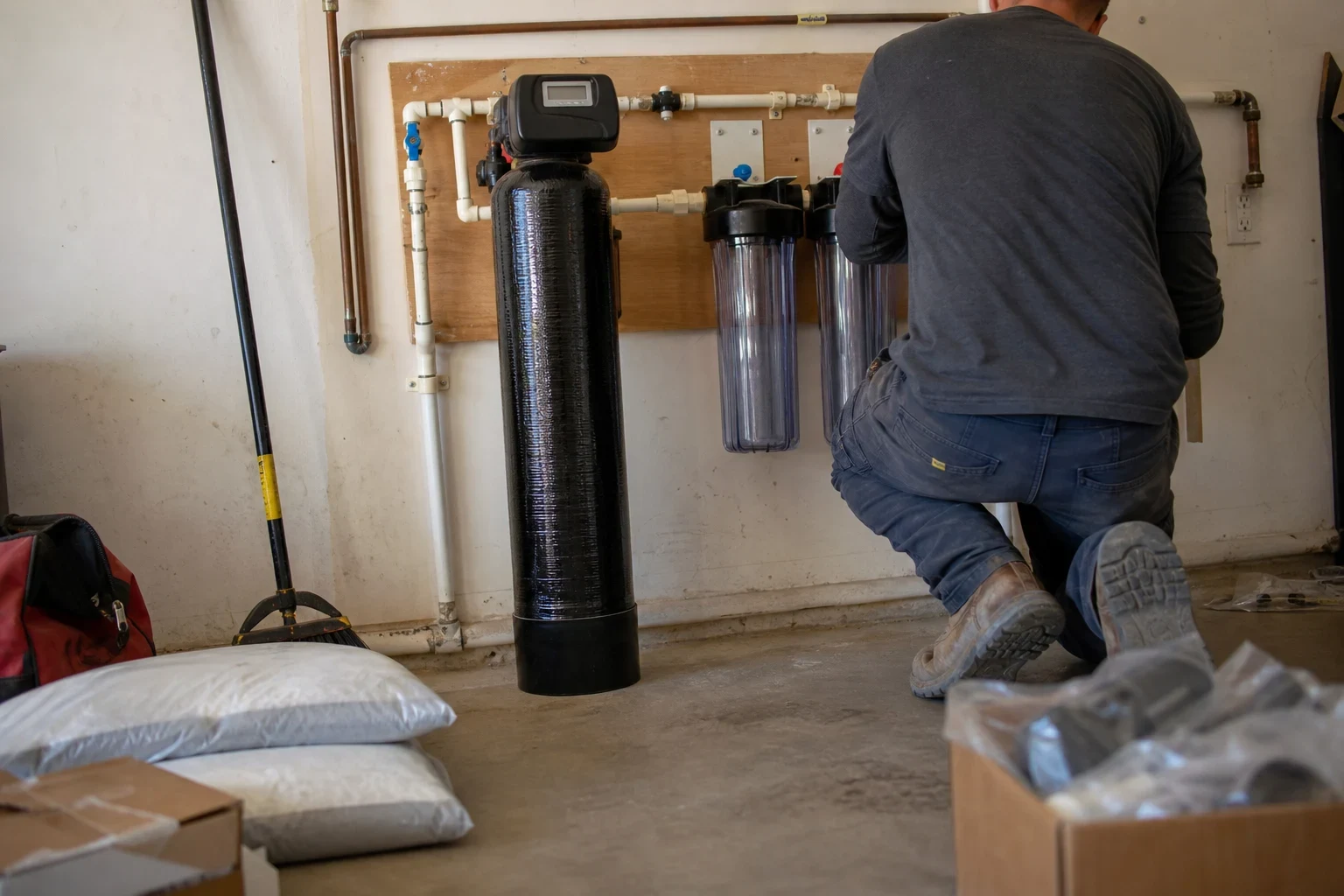
What a Whole-Home Filter Does, and When It Fits
A whole-home system sits where the main line enters your home, often at the plumbing loop in the garage, and treats all of the water before it splits off to fixtures. Most setups are a sediment prefilter followed by a tank of catalytic or granular activated carbon. Carbon adsorbs chlorine and chloramine, the disinfectants water utilities add, along with many of the compounds behind off tastes and smells.
It is the right call when your complaint is taste, smell or that dry, treated feel in the shower. It does not soften water. Carbon does not remove the calcium and magnesium that leave scale, so if crusty fixtures are your main issue, our Water Softeners page covers that. Many homes run both, carbon first and softener second, because chlorine slowly breaks down softener resin.
We plan every install around the years after install day. A filter that is awkward to service tends to get ignored, and an exhausted carbon bed simply stops working. So we place the tank where you can reach it, add a bypass and give you a clear schedule for what needs changing and when.
What Your Whole-Home Filtration Install Includes
- A free water test first
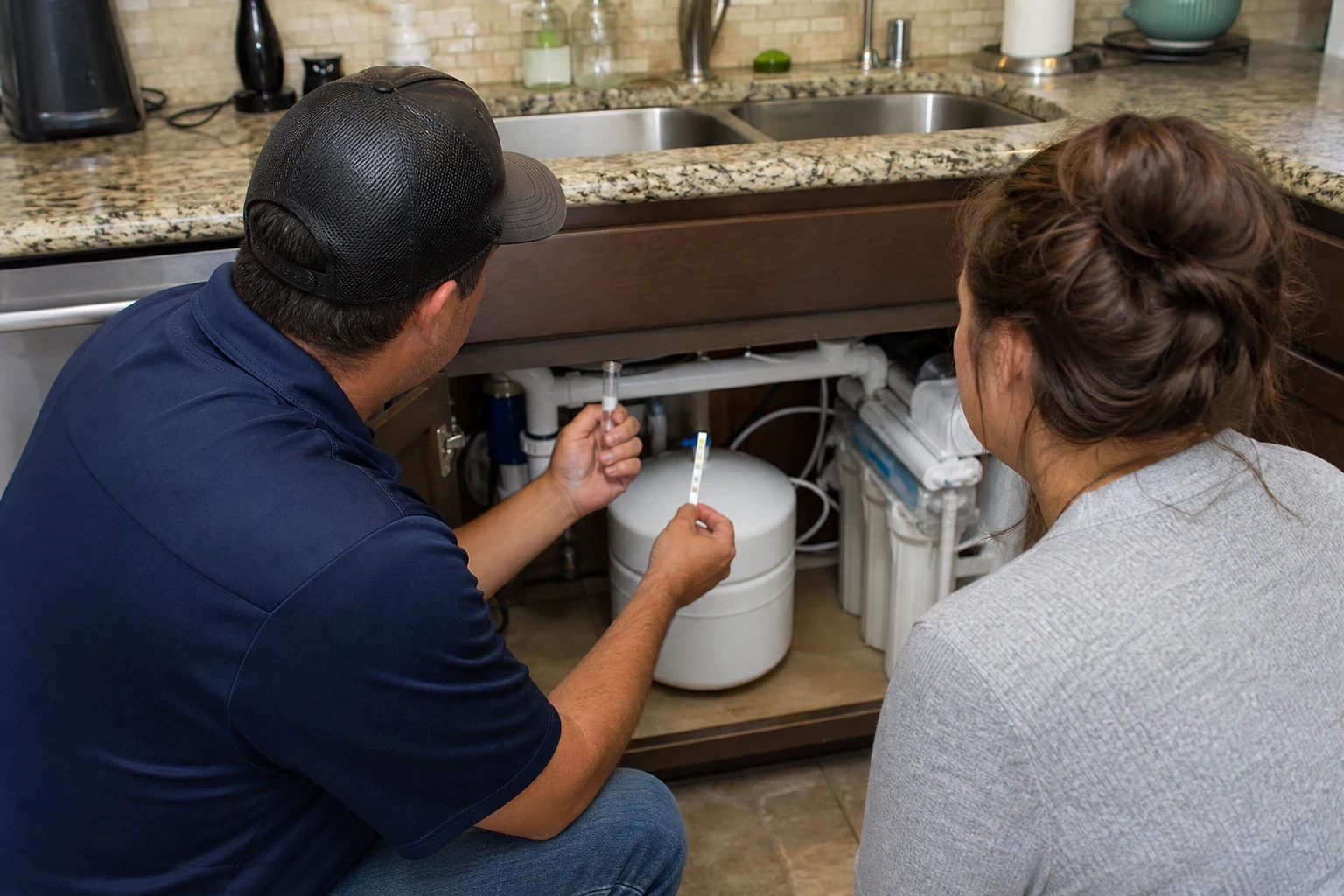
- Before we suggest equipment, we check chlorine or chloramine, hardness and total dissolved solids at your tap. The test is free with zero obligation. The readings decide which carbon media fits and whether a softener belongs in the plan.
- A tank sized to your flow
- We size the carbon tank and control head to your bathrooms and peak water use. An undersized tank drops pressure when two showers run and burns through its media early. A correctly sized bed gives the water enough contact time to actually pull out chlorine.
- Sediment prefilter in a clear housing
- A cartridge ahead of the carbon catches sand, pipe scale and grit before they clog the media bed. The clear housing lets you see when the cartridge is loaded, so you change it on evidence instead of guesswork.
- Bypass loop and isolation valves
- Three valves around the tank let you route water past the system during a cartridge change or repair while the rest of the house keeps running. The same bypass gives a future softener a ready tie-in point, so your main line is not cut a second time.
- Plumbing work covered and backed
- Install is included with our water treatment systems, so the pricing you hear covers the plumbing work too. That work carries our 5-year warranty on installation and labor.
Signs Your Home Could Use Whole-Home Filtration
Chlorine you can smell when bathing
Warm water lets chlorine escape into the air, and a closed shower stall traps it. Treating water at the main line takes it out before it ever reaches the water heater.
Coffee, tea or ice tastes off
Chlorine and chloramine carry into anything made with tap water. If a pitcher filter helps the taste but not the shower, the problem is house-wide.
Dry skin and brittle hair
Some people notice tightness after bathing in chlorinated water. Carbon filtration reduces the disinfectant contact on every shower, not just at one sink.
Grit in aerators and showerheads
Sand or flakes in faucet screens mean sediment is moving through your lines. A prefilter stops it before it wears valve cartridges and appliance inlets.
A softener with no carbon ahead of it
Softener resin exposed to chlorine swells and breaks down faster. Adding carbon upstream protects the softener you already own and stretches its service life.
How a Whole-Home Filtration Install Runs
- 1
Test and talk it through
We test your water and explain what the numbers mean for your home. You hear which media fits, what upkeep it needs and whether anything else is worth adding.
- 2
Pricing by phone
You get installed system pricing by phone, with the tank, media, prefilter and plumbing parts named. Nothing is scheduled until you say yes.
- 3
Install day
One of our partner plumbers shuts off the main, cuts into the line at the loop, and mounts the tank level with the bypass and prefilter in reach. We match your pipe material, whether copper, PEX or CPVC, with proper transition fittings so dissimilar metals and plastics are joined the right way.
- 4
Flush, check and hand off
New carbon is flushed until the water runs clear, then every joint is checked for leaks and pressure is tested at a fixture. We show you the bypass, the prefilter and when each part is due for service, and leave the area clean.
What Moves the Price of Whole-Home Filtration
Your price comes down to the size of the system, the media inside it and how much plumbing work it takes to tie in. Because install is included with our systems, the pricing you hear covers the equipment and the work together. We walk through each part on the phone so you know what you are paying for.
- Tank size and flow rate
- More bathrooms and higher peak use call for a larger tank and more media. Larger beds cost more up front but last longer between replacements.
- Type of carbon media
- Catalytic carbon handles chloramine better than standard granular carbon and costs more. Your water test tells us which one your water needs.
- Plumbing access and pipe material
- A clean loop in the garage is quicker to tie into than a main buried in a wall or run outside. Transitions between pipe types add fittings and labor.
- Pairing with other equipment
- Adding a softener or an under-sink reverse osmosis system at the same visit changes the parts list. Planning them together avoids cutting the line twice.
Common Whole-Home Filtration Questions
Something not covered here? (480) 637-5176
How often does the system need attention?
Expect to replace the sediment cartridge every few months, sooner or later depending on how much grit your line carries. The carbon media lasts much longer, measured in years, depending on tank size and your household's water use. You get a written schedule based on your test results and real usage, so nothing slips by.
Does a whole-home filter cut water pressure?
When the system matches your peak flow, you should not notice any change at the faucet. Weak pressure nearly always traces back to a tank undersized for the home or a prefilter cartridge clogged with grit. We size for your heaviest hour of use and use a clear housing so a full cartridge is easy to see.
Will carbon filtration make my water soft?
No. Carbon takes out chlorine, chloramine and many compounds behind bad taste and smell, but it leaves the calcium and magnesium that form scale. If your test shows hardness, a softener deals with that, and carbon placed ahead of it shields the resin.
Does it remove lead or trace contaminants?
A typical whole-home carbon system targets disinfectants, taste and odor, and it is not a dependable way to remove lead. Under-sink reverse osmosis adds a far finer membrane for the water you drink and cook with. Our Water Testing service can tell you whether that added step is worth it.
How long is the water shut off during the install?
The water is off only while the plumber opens the main and fits the connections, and most whole-home jobs finish a few hours after arrival. The bypass is installed at the same time, so the tank can be closed off immediately if something needs tuning. We flush the fresh media before leaving, so your water is ready for normal use the same day.
Start With a Free Water Test
We test your water at no charge, explain what the readings mean and give you installed system pricing if filtration fits. Our 3 five-star Google reviews are there if you want to hear how the process went for others.