ServicesWater Testing
Water Testing in Surprise for the Equipment You Already Own
We measure hardness, total dissolved solids, chlorine, pH and iron at your tap, then explain what those numbers mean for your water heater, your fixtures and any softener or filter already in your home. The test is free, with zero obligation.
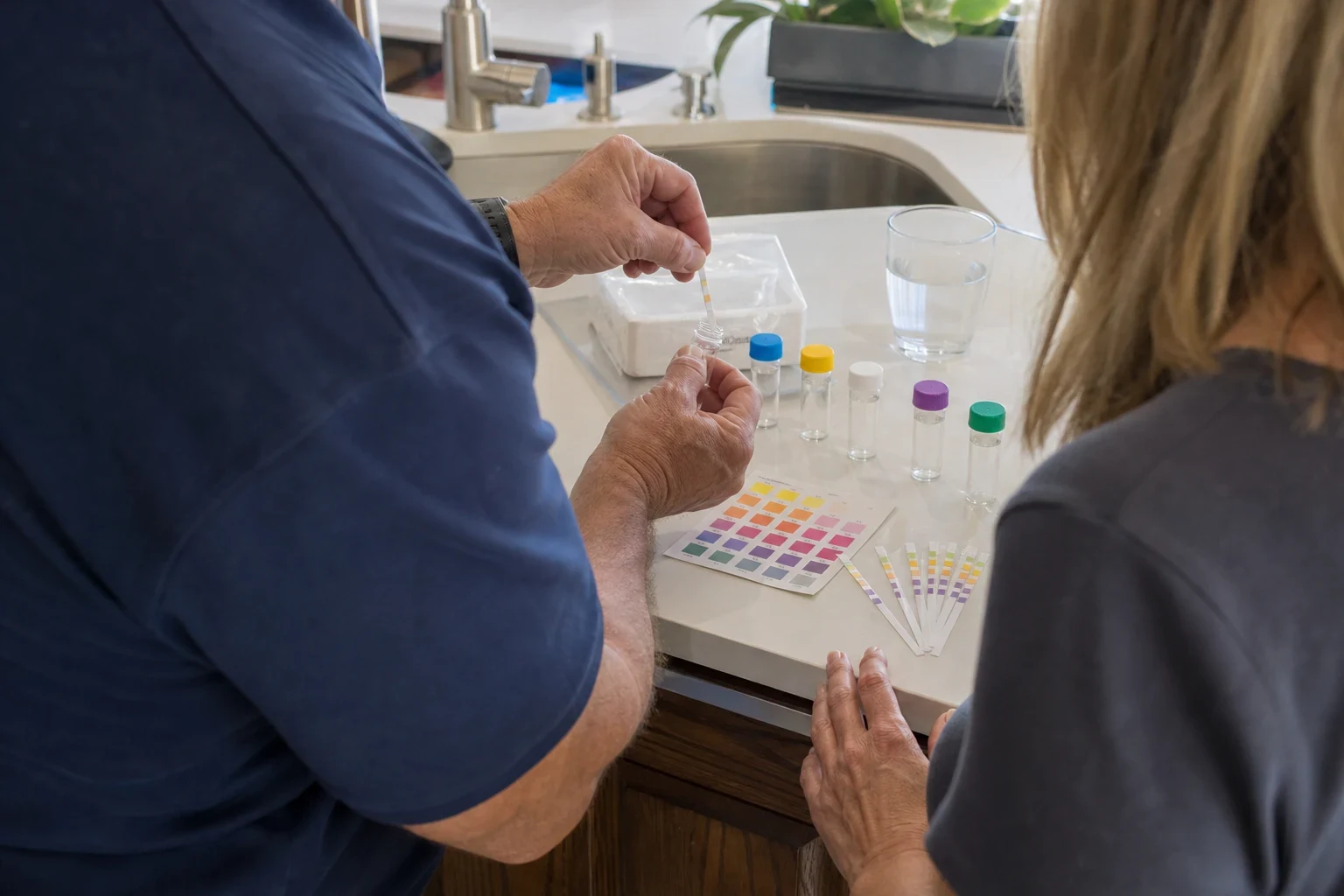
What a water test tells you about your home
Most plumbing equipment wears out because of the water running through it, not just its age. Calcium and magnesium settle as scale in tank water heaters and on heating elements. They also lodge inside faucet cartridges. Chlorine slowly hardens rubber seals and breaks down the resin in an older softener. A test turns those slow problems into numbers you can act on.
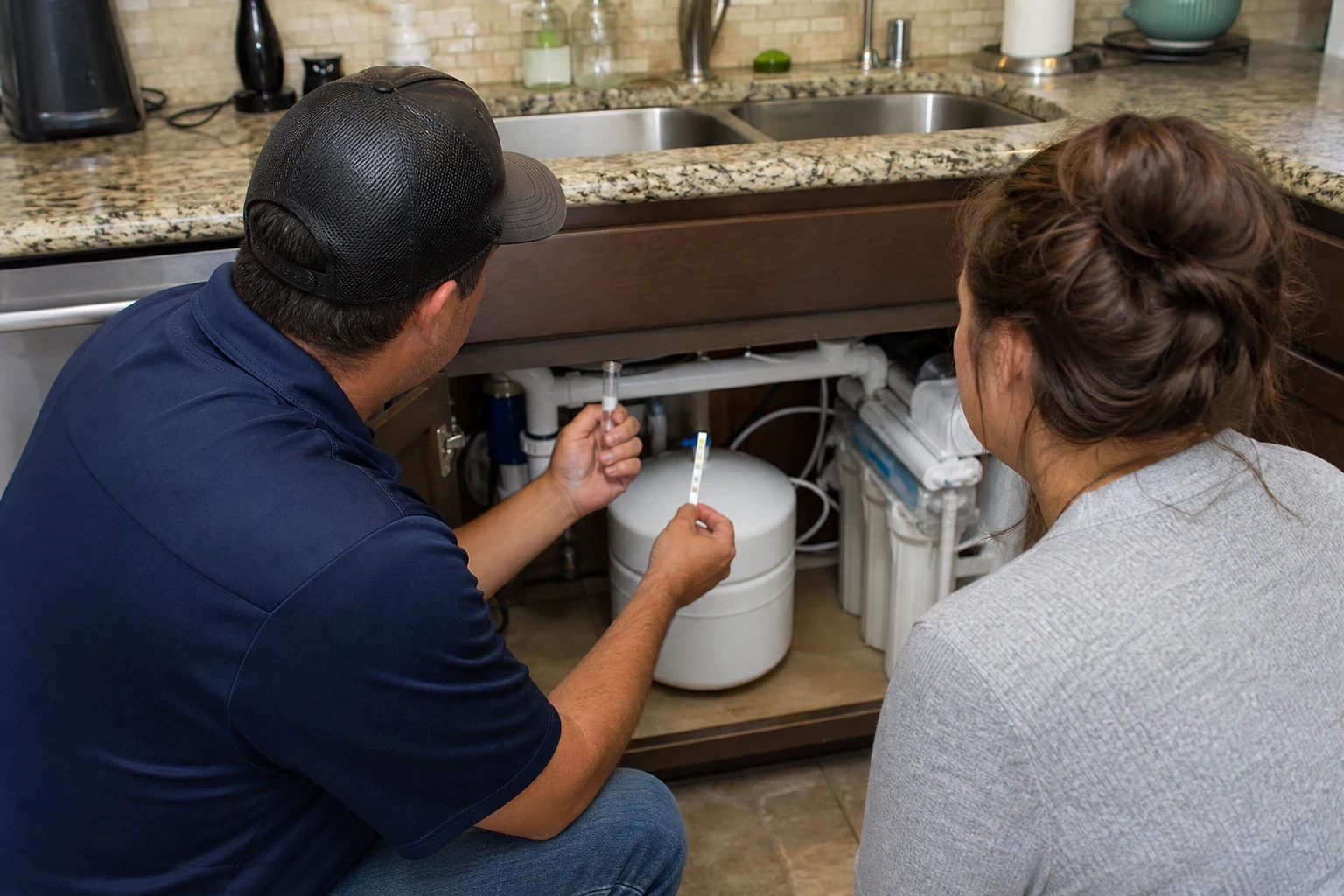
Water across the West Valley tends to run hard, so many homes already have a softener or filter. For those homes, testing is upkeep. We take readings before and after the equipment to see whether it still works, and whether a resin change, a new cartridge or a valve adjustment will keep it going for years.
If your water is fine as it is, we tell you. If the readings point to a system, the recommendation is tied to specific numbers, and you get pricing for it installed.
What we measure during the test
- Hardness in grains per gallon
- We measure dissolved calcium and magnesium. That single number decides whether a softener makes sense, what capacity it needs and how often it should regenerate.
- Total dissolved solids
- A TDS meter gives a baseline for everything dissolved in your water. It is the reading we use to size reverse osmosis and to check whether an existing RO membrane is still rejecting what it should.
- Chlorine level
- Chlorine from treatment is what you taste and smell, and it is hard on rubber parts and softener resin. The level tells us whether a carbon stage would help.
- pH and iron
- Low pH can slowly thin copper pipe from the inside. Iron leaves rust-colored stains and coats softener resin until it stops exchanging minerals.
- Readings on the unit you own
- When a softener or carbon tank is already plumbed in, we draw one sample ahead of it and a second one after it. Comparing the two shows plainly whether the unit is doing its full job, only part of it, or none because the bypass is open.
Signs it is time to test your water
White crust on fixtures
Chalky buildup on showerheads, faucet aerators and glass shower doors is calcium carbonate. It is forming inside your pipes and appliances too.
A water heater that pops or rumbles
That sound is water trapped under scale and sediment on the tank bottom. The burner or element works harder and the tank wears faster.
A softener that runs but spots remain
The resin may be exhausted or fouled with iron, the brine tank may have a salt bridge, or the bypass valve may be partly open. A before-and-after reading shows which.
Chlorine taste or smell
If tap water smells like a pool, a measured chlorine level tells you whether a carbon filter is worth it.
Drinking water that tastes different
When RO water starts tasting flat or mineral-heavy, rising TDS usually means the membrane or prefilters are past their working life.
What shapes the price after your test
The water test itself is free, with zero obligation. What a system costs afterward depends on what the readings call for, and installation is included with water treatment systems. These are the factors that move that number.
Hardness and household use
Higher hardness and more people in the house mean more grain capacity in a softener, which changes the tank size and the salt it uses.
Where the system connects
Homes with a plumbed loop in the garage are simpler. Without one, the plumber has to cut into the main line near the shutoff, which adds time and fittings.
Condition of existing equipment
A softener that only needs new resin or a valve service costs far less than a replacement. We check this first.
Number of treatment stages
A carbon prefilter, a softener and an under-sink RO unit are separate pieces of equipment. Your readings decide which ones you actually need.
Drain and power access
Softeners and RO units need a drain line, and softener valves need an outlet. Long runs to either add materials and labor.
How the test works
- 1
A short phone call
You tell us what you have noticed and what equipment is already in your home, and we set a time that works for you.
- 2
Sampling at your taps
We run the cold kitchen tap long enough to clear standing water, then sample. If you have a softener or filter, we also sample before and after it.
- 3
Readings explained on the spot
We write down each number and walk you through what it means for your fixtures, water heater and existing equipment. You can ask anything.
- 4
Options and installed pricing
If the numbers support it, we explain the fix: maintenance on what you own, or whole-home filtration, water softeners or reverse osmosis. Each option comes with installed pricing and the reading it answers, so you can see why it is on the list. If nothing needs doing, the visit ends there.
Common questions about our water tests
Do you really charge nothing for the test?
Correct. There is no charge and no obligation. We hand over the numbers and explain them, and buying something is entirely up to you.
What can't the in-home test check?
We read hardness, TDS, chlorine, pH and iron. Checking for lead, bacteria or trace contaminants takes lab equipment we do not carry, so those go to an outside laboratory. If you want them checked, we will tell you how to set that up.
Why test if a softener is already installed?
Resin slowly loses capacity with age or an iron coating, so the decline is easy to miss. A reading ahead of the unit and one after it shows whether hardness is still coming out. Many times fresh resin or a valve service restores it with no new equipment.
How often is a retest worth doing?
With treatment equipment in place, a yearly test is a good routine, plus a test whenever new spots, a taste change or water heater noise shows up. Checking regularly flags a worn resin bed or membrane before scale settles into your appliances.
If I buy a system, who puts it in?
Our partner plumbers do the work, and we schedule it with them. Every system we sell goes in through installs done by licensed and insured partner plumbers, backed by a 5-year warranty on installation and labor. The install is part of the price of water treatment systems.
Find out what your water is doing to your home
One call sets up your free test and gets you installed system pricing if the readings call for one. Our customers have left us 3 five-star Google reviews.