ServicesReverse Osmosis
Reverse Osmosis in Surprise, Installed Under Your Sink
We install under-sink reverse osmosis systems that strip dissolved minerals and off-tastes from the water you drink and cook with. We stage the filters so each one protects the next, which keeps the membrane working longer and keeps your upkeep simple.
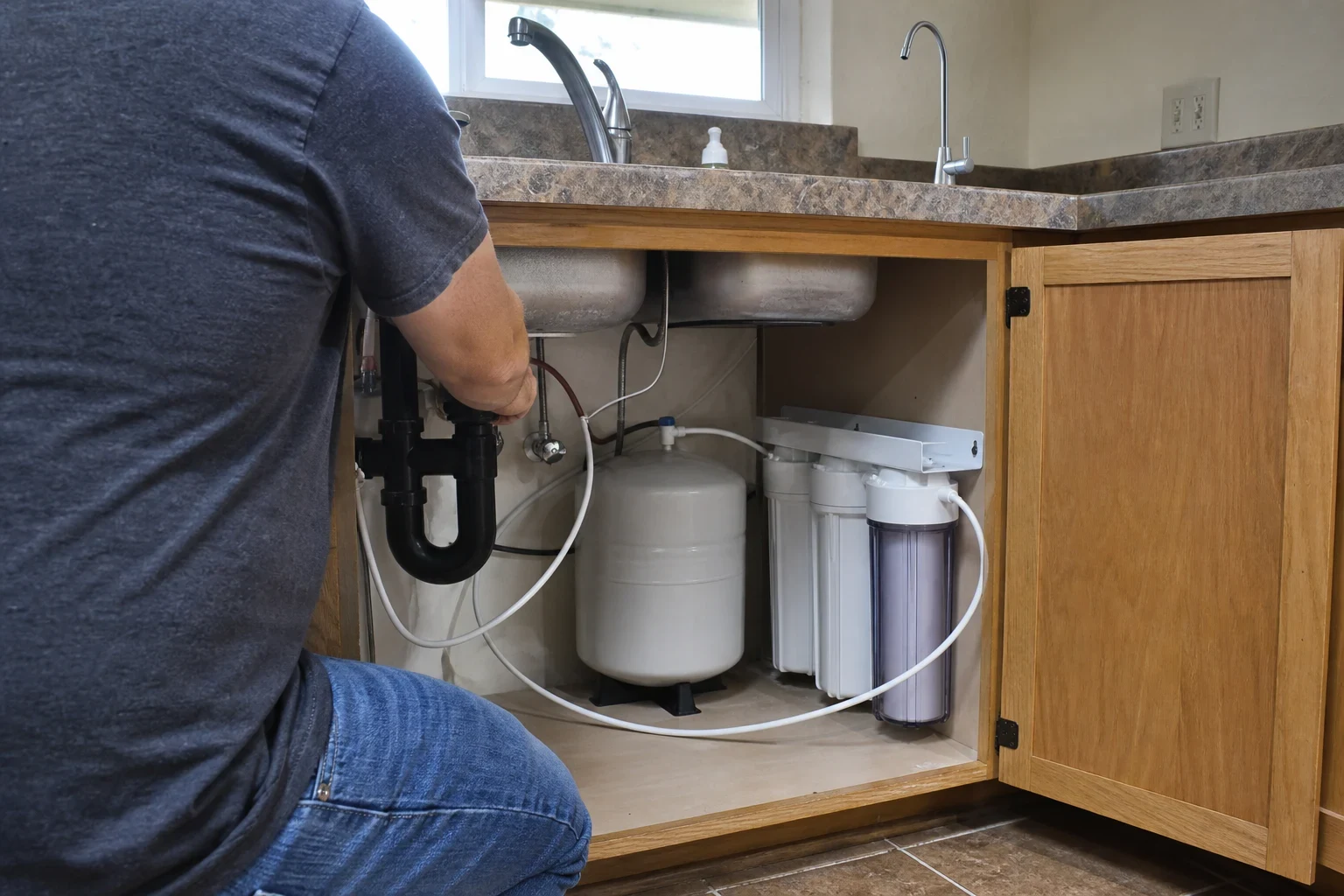
What Reverse Osmosis Does and When It Fits
A reverse osmosis system pushes water through a semi-permeable membrane with pores far smaller than the dissolved salts, minerals and many trace contaminants in tap water. What passes through goes to a small storage tank and a dedicated faucet. What is rejected rinses to the drain. The result is low-mineral water for drinking, coffee, ice and cooking.
Because the system sits at a single faucet, it handles drinking and cooking water only. Showers, laundry and the water heater still get untreated water. That makes RO the right call when the worry is what goes into a glass or a pot. For scale throughout your home, pair it with whole-home filtration or a softener upstream.
Hard, mineral-heavy water is common across the West Valley, and that is the main thing that wears out an RO membrane early. We plan every install around that, so the system you buy keeps making good water for years instead of slowing down after one summer.
What the Install Includes
- Sediment and carbon prefilters
- A sediment cartridge catches grit and rust flakes first. A carbon block follows to remove chlorine, which would otherwise break down the thin-film composite membrane.
- The RO membrane and housing
- We fit a membrane rated for your daily use and your incoming pressure. Matching the two keeps production steady and the reject rate reasonable.
- Storage tank, pressure checked
- We check the tank's air bladder pressure before it goes under the sink. A tank set wrong delivers a weak trickle at the faucet even when the membrane is fine.
- Faucet mounting and reject line
- The RO spout goes into the sink's spare sprayer or soap hole when there is one. If not, we bore a new hole sized for it. The reject line ties into the sink drain through a saddle set above the trap, so drain water has no path back into the system.
- Optional refrigerator or ice maker line
- If you want RO water at the fridge, we run a tubing line to it and explain what that does to tank refill time.
- Partner plumbers who follow your parts list
- Our partner plumbers handle the hands-on work and install exactly what you approved by phone. They label the feed valve and the filter housings before they leave, so the next cartridge change is easy to find.
Signs Reverse Osmosis Makes Sense for Your Home
You buy bottled water every week
If the tap tastes salty, flat or chlorinated enough that nobody drinks it, an RO faucet replaces the jugs and the trips to the store.
White crust on kettles and coffee makers
That scale is dissolved calcium and magnesium left behind as water boils off. RO removes most of it before it reaches the appliance.
Ice that is cloudy or leaves residue
High dissolved solids freeze into cloudy cubes and leave film in glasses. RO water usually freezes clearer.
Your current RO has slowed down
A tank that takes hours to refill or a faucet that sputters usually points to prefilters packed with sediment, a membrane coated in scale, or a storage tank whose air bladder has gone flat. We check those parts before suggesting anything new.
Older plumbing and you want extra assurance
A membrane adds a final barrier at the one tap you drink from, which many owners of older homes appreciate.
How the Job Runs
- 1
Free water test first
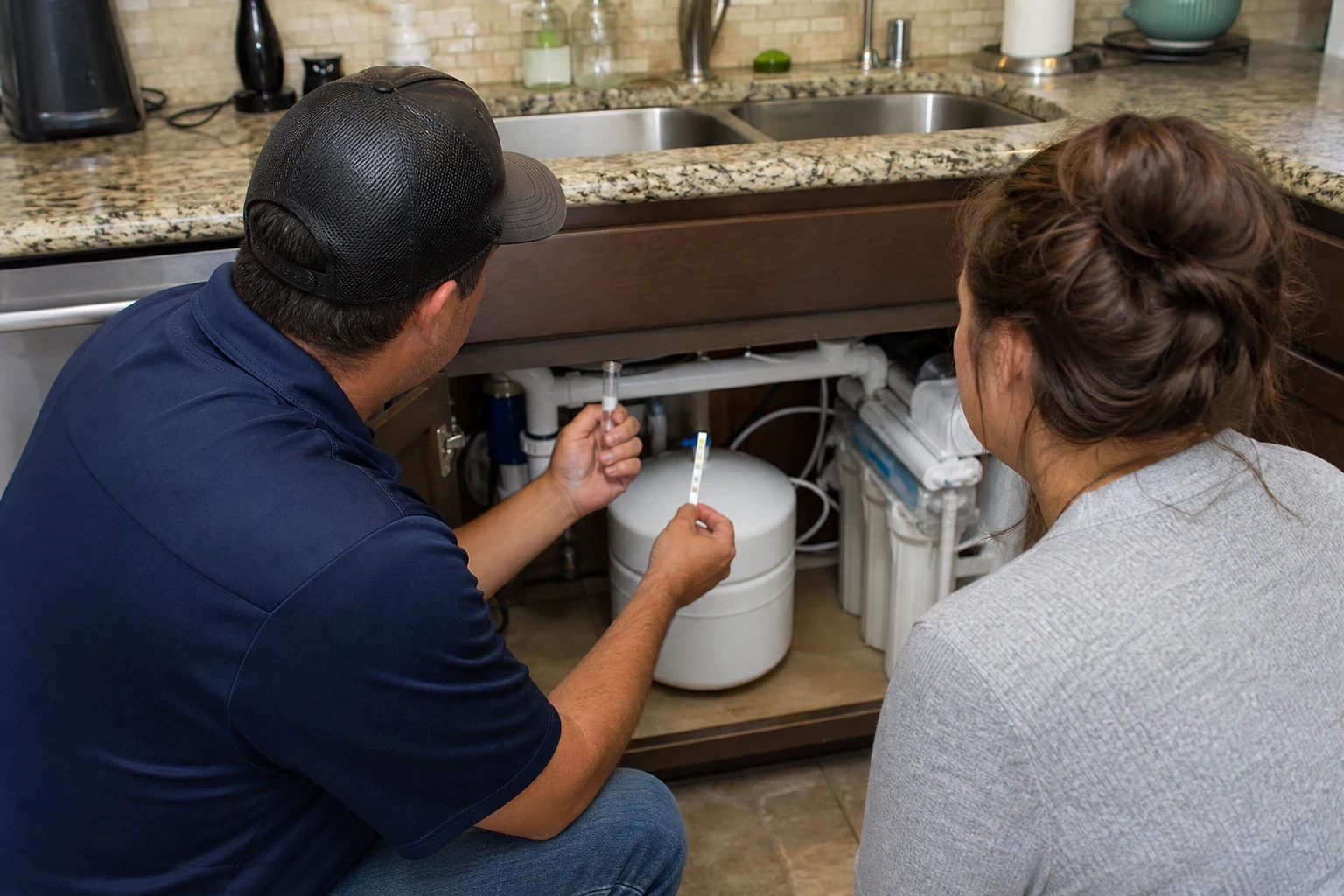
We measure total dissolved solids, hardness and chlorine at your tap. The readings tell us whether RO alone is enough or whether the membrane needs protection upstream.
- 2
Quote by phone with each part named
You get installed system pricing that lists the prefilters, membrane, tank and faucet, plus any fridge line. Install is included with water treatment systems.
- 3
Install day under the sink
We shut the feed at the angle stop, add a tee and feed valve, mount the filter bank and tank, and connect faucet and drain. Most kitchens are back in use the same visit.
- 4
Flush, leak check and walkthrough
We flush the first tanks of water to clear carbon fines, check every fitting for drips and show you which cartridges change and roughly when.
What Moves the Price of an RO System
Price comes down to the equipment you need and how hard your kitchen is to work in. Your water test answers most of it before anyone quotes. We give installed pricing by phone so you know the total before the install.
- Stage count and add-ons
- The standard setup of sediment filter, carbon block, membrane and post-filter is the starting point. A remineralizing cartridge or an extra polishing stage raises the equipment cost, and your test results decide whether either is worth adding.
- Incoming water pressure
- RO membranes need steady pressure to produce well. Low pressure can call for a permeate pump or booster, which adds parts.
- Where the RO spout goes
- A spare opening already in the sink deck lets the spout drop right in. Stone counters such as quartz or granite need a diamond core bit and slow, cooled boring, so that location adds labor time.
- Extra lines and locations
- Running RO water to a refrigerator, ice maker or second sink adds tubing, fittings and labor.
Reverse Osmosis Questions
Something not covered here? (480) 637-5176
How often do the filters need changing?
Sediment and carbon prefilters are typically changed every six to twelve months, depending on use and water quality. The membrane usually lasts several years when the prefilters are kept fresh. Skipping prefilter changes is the fastest way to ruin a membrane early.
Does a reverse osmosis system waste water?
Yes, some water rinses to the drain to carry rejected minerals away. How much depends on the membrane, your pressure and your hardness. Correct pressure and a well-maintained system keep that ratio in a sensible range.
Should I have a softener before the RO?
Not always. On very hard water, a softener upstream reduces the scale that clogs the membrane and can noticeably extend its life. Our water test shows whether that is worth it in your home.
Will RO water taste different?
It tastes cleaner and flatter because most dissolved minerals are gone. Some people like it as is. If you prefer a fuller taste, a remineralizing stage adds a small amount back.
Is the install work covered after you leave?
Yes. The work comes with a 5-year warranty on installation and labor, so a fitting that weeps or a drain saddle that loosens gets fixed without a new bill. Our 3 five-star Google reviews come from customers who went through the same test, quote and install steps.
Get Drinking Water That Stays Good
Start with a free water test with zero obligation. We will tell you what your tap shows and price an RO system set up to last.