ServicesWater Softeners
Water Softener Installation in Surprise, Sized From Your Test
We test your water, size the resin tank to your hardness and household, and install a softener that stops scale before it reaches your water heater, faucets and appliances. Then we show you the simple upkeep that keeps it running for years.
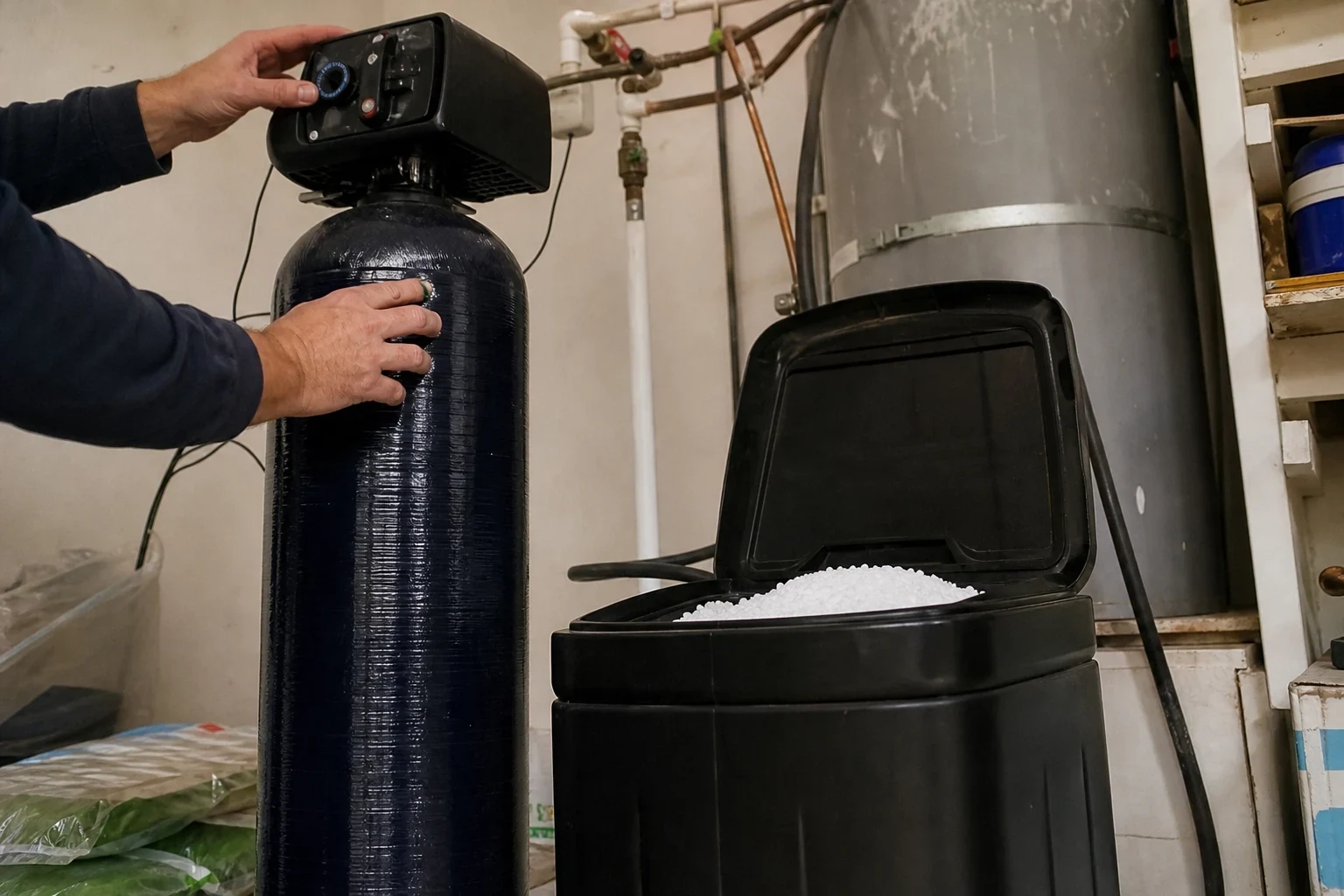
What a softener does inside your plumbing
Inside a softener sits a pressure tank packed with small resin beads that carry a charge of sodium or potassium. As incoming water passes over them, the calcium and magnesium that cause scale trade places with that sodium or potassium and stay behind on the beads. Once the resin is loaded, the control valve starts a regeneration: brine from the salt tank washes the beads clean and the captured minerals flush out through the drain line.
Hard water is common across the West Valley, and the scale it leaves is what shortens the life of tank water heaters, tankless units, faucet cartridges and dishwasher elements. Removing the minerals that form that scale lets the equipment you already own keep working longer, with fewer descaling jobs and early replacements.
A softener does not remove chlorine taste or dissolved solids. If those bother you, whole-home filtration or reverse osmosis at the kitchen sink handles them, and we will tell you plainly which one fits.
What your softener install includes
- Hardness test and sizing
- We measure your hardness, then work out daily grain load from that number and how many people live in your home. That sets the resin volume, so the unit is not regenerating every night and burning through salt.
- Loop or main-line connection with bypass
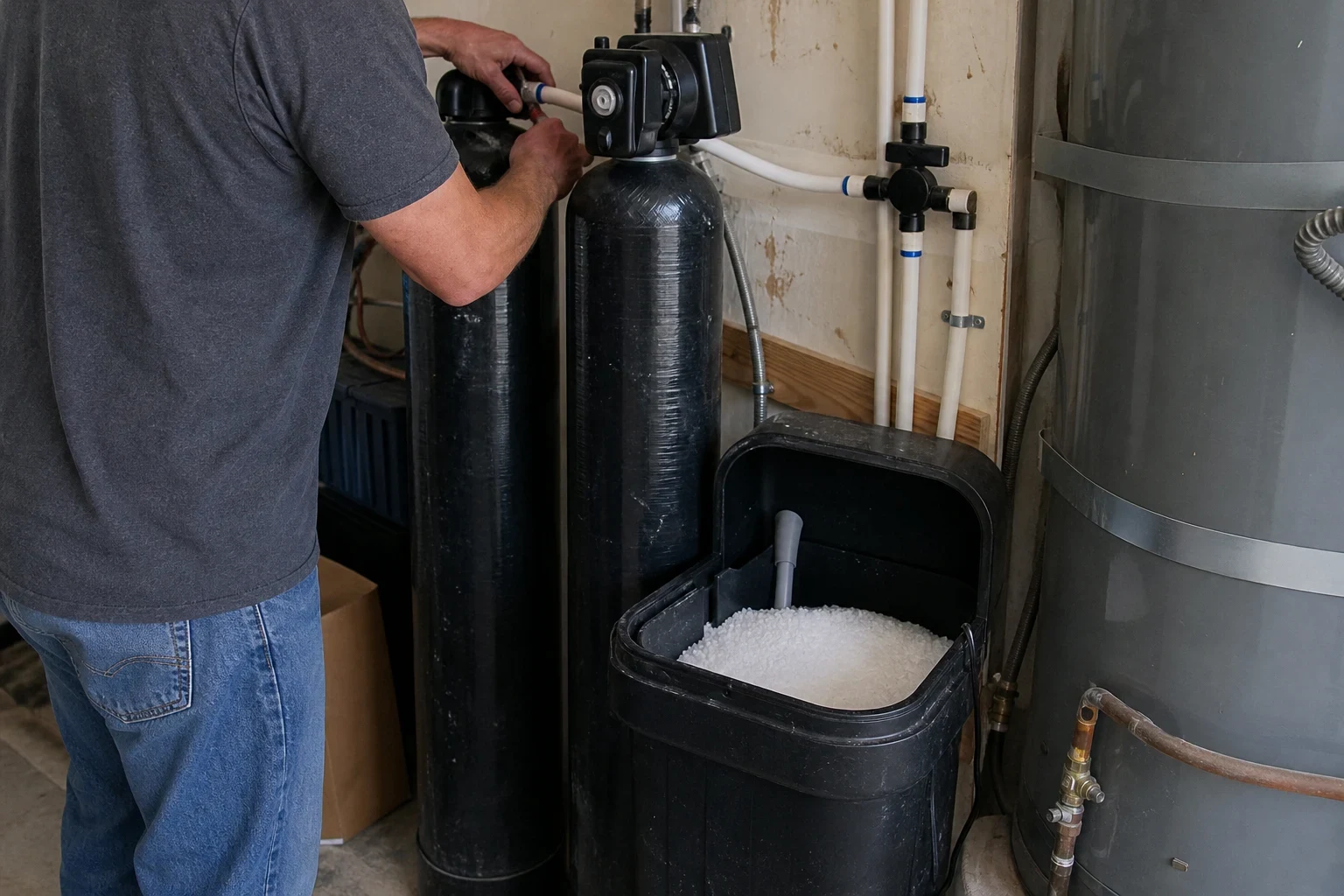
- Many homes here were built with a softener loop in the garage, and we tie into it when it is sound. With no loop, we connect at the main line instead. A three-way bypass valve goes in either way, so the tanks can be taken offline for service while your faucets still run.
- Air-gapped discharge
- Brine and rinse water from each regeneration run to a drain through a code-compliant air gap. That open break means wastewater has no path back into the softener.
- Control valve programming
- We enter your hardness, set regeneration for overnight hours and leave a reserve so you never run short of soft water mid-shower.
- Install included
- Install is included with the water treatment systems we supply, so the price you get covers the equipment and the plumbing work together.
- Walkthrough and upkeep plan
- Before we leave, we show you the salt level to watch, how to use the bypass and how to read the valve display.
Signs your home could use a water softener
White crust on fixtures and glass
Chalky rings on faucets, showerheads and glass doors are calcium carbonate left behind as water evaporates. Heat makes it harder to wipe off.
A rumbling water heater
Scale settles on the bottom of a tank heater and traps water under it, which causes popping as it boils off. Tankless units may show scale or flow errors.
Soap that will not lather
Dissolved calcium and magnesium react with soap and form a sticky curd instead of suds. The result is extra shampoo in the shower, extra detergent in the washer and a film on dishes that rinsing does not clear.
Cartridges and appliances wearing out early
Faucet cartridges, toilet fill valves and ice maker valves stick and leak sooner when scale builds inside them.
An existing softener that stopped keeping up
If salt is not dropping or hard spots are back, the cause may be a salt bridge, a clogged injector or tired resin. We check whether the unit can be serviced before we suggest replacing it.
What moves the price of a softener
Every home's price is built from its own water test and plumbing. Once we have seen both, we explain each line by phone. These are the things that move it most.
Capacity
Higher hardness and a bigger household need more resin and a larger brine tank.
Existing loop or new plumbing
A sound garage loop keeps labor down. Running new pipe, rerouting a drain or working in a tight closet adds time and material.
Metered or timer control
A demand-metered head counts the gallons you use and only regenerates when the resin is close to full, which cuts salt and water use over the life of the unit. A clock-timer head is cheaper at the start but regenerates on fixed days no matter how much water went through.
Removing an old unit
Hauling out an old softener and repairing a corroded loop connection adds to the job.
Pairing with other equipment
Adding a carbon prefilter or a reverse osmosis unit at the same visit changes the total, but it can share the plumbing work.
How a softener install runs
- 1
Free water test
We test your water with zero obligation and talk through the hardness reading, along with anything else it shows.
- 2
Your price by phone
We give you installed system pricing that names the tank size, valve type and any plumbing changes, so you know what you are paying for.
- 3
Install day
We protect the floor, shut off the water, set the tanks level, connect the loop or main line with a bypass, run the drain line and fill the brine tank.
- 4
Startup and check
We program the valve, run a first regeneration and test water at a faucet to confirm it reads soft. Then we clean up and remove packaging.
- 5
Upkeep afterward
You add salt as needed, and we are a phone call away for valve checks, brine tank cleaning or resin questions as the system ages.
Water softener questions
Does my water really need softening?
Hard water is common in this area, but hardness varies with the source and your plumbing. We test your water first with zero obligation. If the reading does not justify a softener, we will say so.
What upkeep does a softener need?
Check the salt tank about once a month and keep it at least a quarter full. Break up any hard crust, called a salt bridge, that forms above the water. Cleaning out the brine tank every year or so keeps sludge out of the injector, which is the part that draws brine into the resin.
What warranty comes with the install?
Every softener we put in carries a 5-year warranty on installation and labor. If a connection or fitting we made gives you trouble in that time, we come back and fix it.
My old softener quit working. Does it have to be replaced?
Not always. A lot of units stop softening because of a worn valve seal, a plugged injector or a salt bridge, and each of those can be repaired for far less than a new system. When the resin is exhausted or parts for the valve are no longer made, we show you why and walk through what a replacement would include.
Will softened water taste salty?
Ion exchange adds a small amount of sodium, and most people do not taste it. If you would rather limit it, potassium chloride works in place of salt, or a reverse osmosis unit at the kitchen sink removes it from your drinking water.
Who does the plumbing?
Installs done by licensed and insured partner plumbers. We arrange the water test and the pricing, and we stay your contact from the first call through startup and any questions later on.
Start with a free water test
One call gets your water tested and your installed price explained part by part. Our customers have left us 3 five-star Google reviews.